


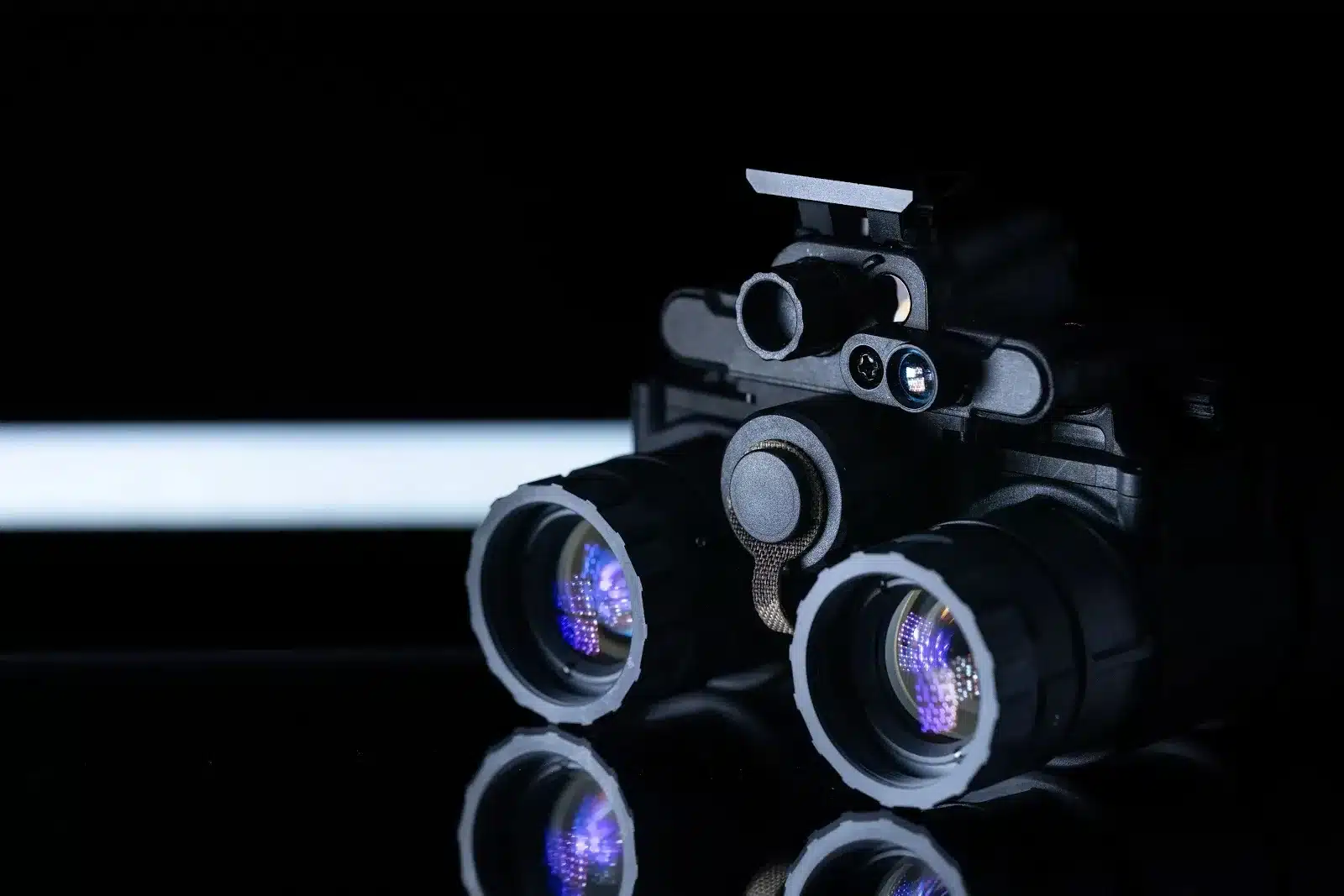
There’s a lot of chatter in the night vision world about which spec matters most, and most of it starts and ends with FOM. But if you’re shopping by that one number alone, you’re missing the parts that actually decide how the device performs once it’s on your helmet and you’re moving through the dark.
Choosing a night vision platform is an exercise in optical system integration. A single spec on a tube data sheet only tells part of the story. What matters is how the tubes, lenses, housing, and build all work together in real use. For dual-tube binocular NVGs, this means looking past simple specs alone and seeing how the entire system will perform for your use case once you’re out there.
What Should You Look for in Binocular Night Vision Equipment?
Really, it comes down to how you’ll use the device:
Will you be observing from mostly stationary positions, constantly on the move, or mixed? Will you be working in rural areas with few ambient light sources, or urban or suburban areas with higher average ambient light? Working largely with or without firearms? These answers will best determine which type of system, which features, and which components to use.
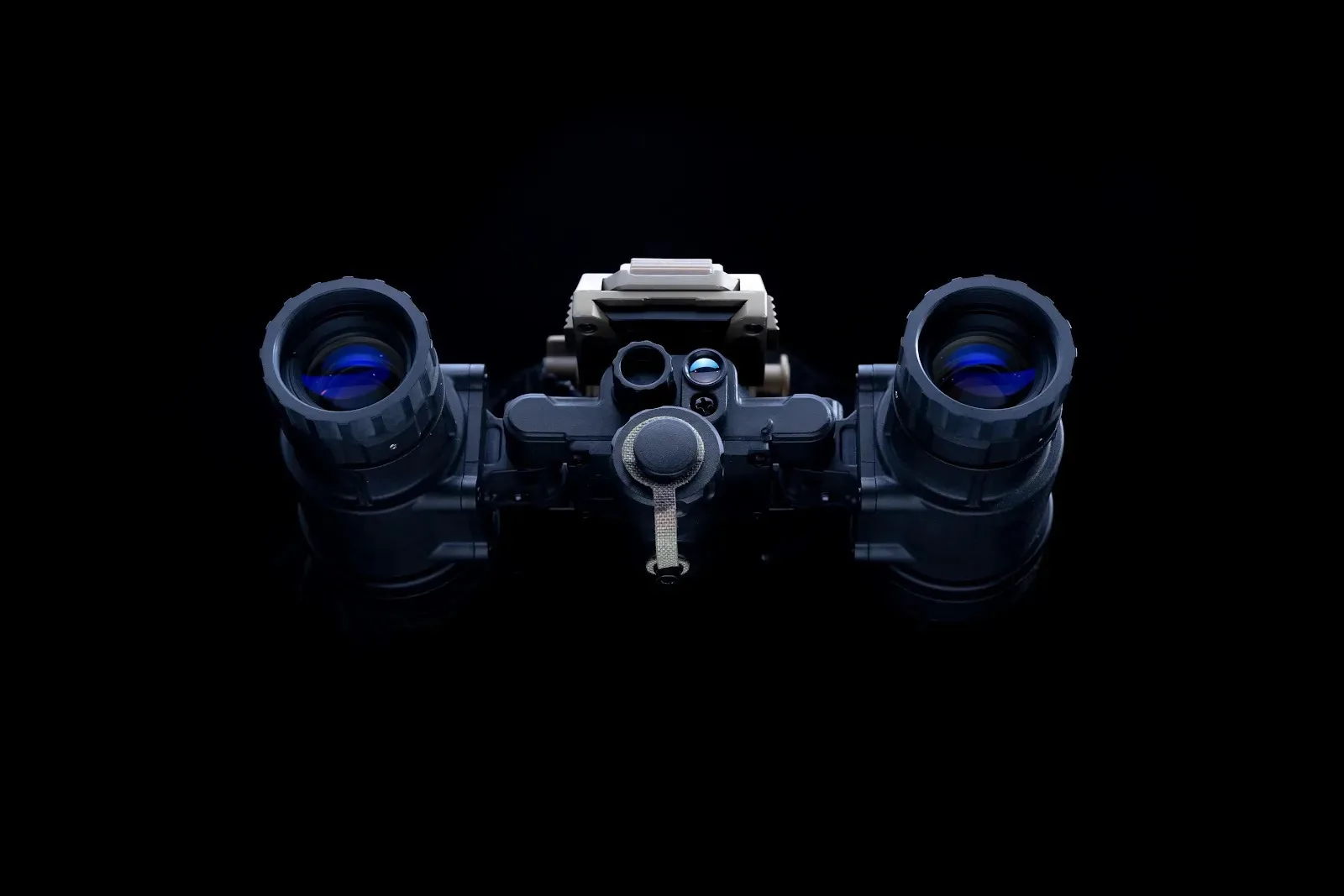
A dual-tube binocular gives each eye its own optical path. This process is called stereopsis. A monocular intensifies light for one eye only, leaving the other unaided. Neither format is universally “better.” The right call depends on your mission, your environment, and how you’ll move through it.
Dual-Tube Systems Build Confidence Through Binocular Vision
Dual-tube NVGs help your brain read distance and movement more naturally, since both eyes get intensified imagery. That matters when you’re stepping over rocks, crossing ruts, or picking your way through brush in primarily very low ambient light scenarios. You still need training, but the visual workload is lighter than with a single intensified eye.
With a monocular, your aided eye sees the path while your unaided eye is picking up completely different brightness and contrast. While this can be beneficial in many scenarios, that mismatch adds up over a long night, leading to more fatigue and slower foot placement, especially once you’re moving over irregular ground. With dual-tube binocular NVGs, your depth perception is more natural, so curb height and ditch edges are a lot easier to judge.
These systems also earn their keep in vehicle work and extended team movement. They’re a natural fit, too, for use with weapon-mounted aiming lasers and other active-aiming scenarios that call for stable two-eye awareness, given the right training.
The tradeoff is cost and complexity. A binocular system has two tubes and two optical channels that have to be precisely aligned, or “collimated.” This is why at AEONTAC we hand-assemble each dual-tube system to order, using the latest Hoffman ANV-126A testing equipment & software suite, in the largest, most sophisticated facility on the West Coast.
When Does a Monocular Night Vision Device Win?
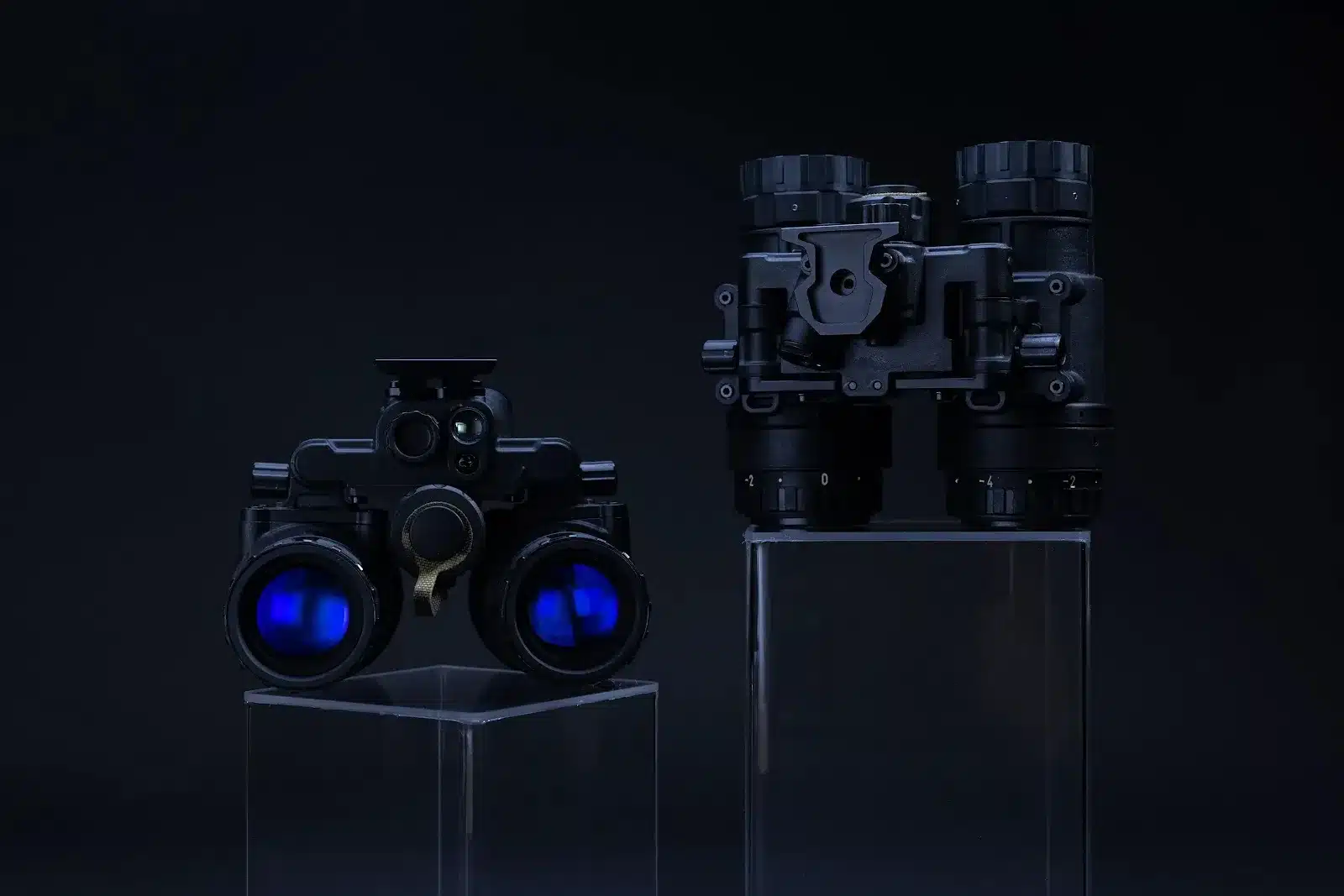
A Monocular wins in several scenarios: If your mission entails widely varied environments, like being in and out of vehicles, moving from outdoors to indoors frequently, or from heavily wooded areas into pasture or suburbs, for example. That is why independently articulating pods are such a coveted feature in dual-tube binocular systems: the user can quickly deactivate one pod and use that eye unaided and naturally for fast transitions in environment and ambient lighting. Add to that major weight, space, and especially cost savings, a single-tube system like the PVS-14 is the obvious choice.
If you’re a first-time NVG buyer working on a budget, but want to begin your NVG training, just enjoy some wildlife spotting with family, or simply begin your nocturnal journey, a Monocular may be your best bet.
Understanding Gen2+ and Gen3 Performance
There is a lot of confusion regarding the differences between GEN2+ and GEN3 intensifier tubes, especially now that GEN2+ is becoming more widely available. First: GEN2+ and “GEN2” are not the same. “GEN2” refers to intensifier technology that entered the market in the 1980s domestically and was phased out in military and commercial markets in the 1990s. GEN2+ technology arrived just a few years AFTER GEN3 and has been continually improved ever since.
Both GEN2+ and GEN3 electrochemically amplify ambient light, both visible & invisible to the human eye, but they get there differently, and there are inherent trade-offs to both. Technically speaking, most of the difference lies in the type of photocathode used and the multichannel plate, but let’s focus on real-world performance differences
First, some spec sheet metrics you should understand:
SNR (Signal-to-Noise): How much light is intensified versus system and background noise. Affects how clear and clean the intensified image looks in the dark.
RES (Center Resolution): The depth of detail the tube is able to resolve, measured in lines per sq inch. The human eye is able to resolve about 64-74 LP unaided.
FOM (Figure of Merit): A useful “At-A-Glance” figure, FOM is determined by multiplying SNR and RES. However, FOM is far from the whole picture (more on this below)
Generally speaking, when comparing, GEN3 wins on SNR. SNR values of 33, 36, or even higher are extremely difficult to achieve with GEN2+ tubes, but can be found in the highest-performing, most expensive GEN3 tubes, often at a premium of double the cost of average GEN3 tubes and three or even four times the cost of the best GEN2+ tubes. RES can also be higher on GEN3+ tubes, but since the human eye can only resolve 64-74 LP/in, RES ratings higher than this don’t add anything usable and can create an artificially high FOM figure.
Conversely, GEN2+ tubes collect a much wider spectrum of light than GEN3 tubes, often have faster or even MUCH faster autogating than GEN3, and show less “bloom” from light sources, allowing for superior mixed-light handling compared to GEN3. And don’t forget cost.
But what does all this mean in actual use? Simply put; comparing average NVT or Photonis 1800-2000FOM GEN2+ tubes to average 1800-2376FOM GEN3 tubes from L3Harris or Elbit; users will notice:
-
GEN3 Tubes, with higher SNR and GAIN values, will present a clearer, brighter image in the lowest-possible ambient light settings, such as under tree cover on a cloudy, moonless night. Across varied scenarios in average use, the difference is negligible.
-
GEN2+ tubes will present richer “hue” or image characteristics, due to collecting light from both lower and, in some cases, higher on the light spectrum
-
GEN2+ tubes, depending on the make, can have lightning-fast autogating, making them the better performer when used with unsuppressed firearms presenting muzzle flash, or in any scenario where ambient light levels can change rapidly
-
Regardless of FOM, certain GEN3 tubes can have gain ratings much higher than the average GEN2+ tube. This will result in a noticeably brighter image across all use-cases, but not necessarily clearer or more detailed. (Pro-Tip: GEN2+ tube gain is measured differently than GEN3. When comparing the two ratings, be sure to multiply the GAIN rating shown on the GEN2+ Spec Sheet by Pi (3.14) to compare “apples 2 apples”).
Why FOM Shouldn’t Be Your Only Buying Metric
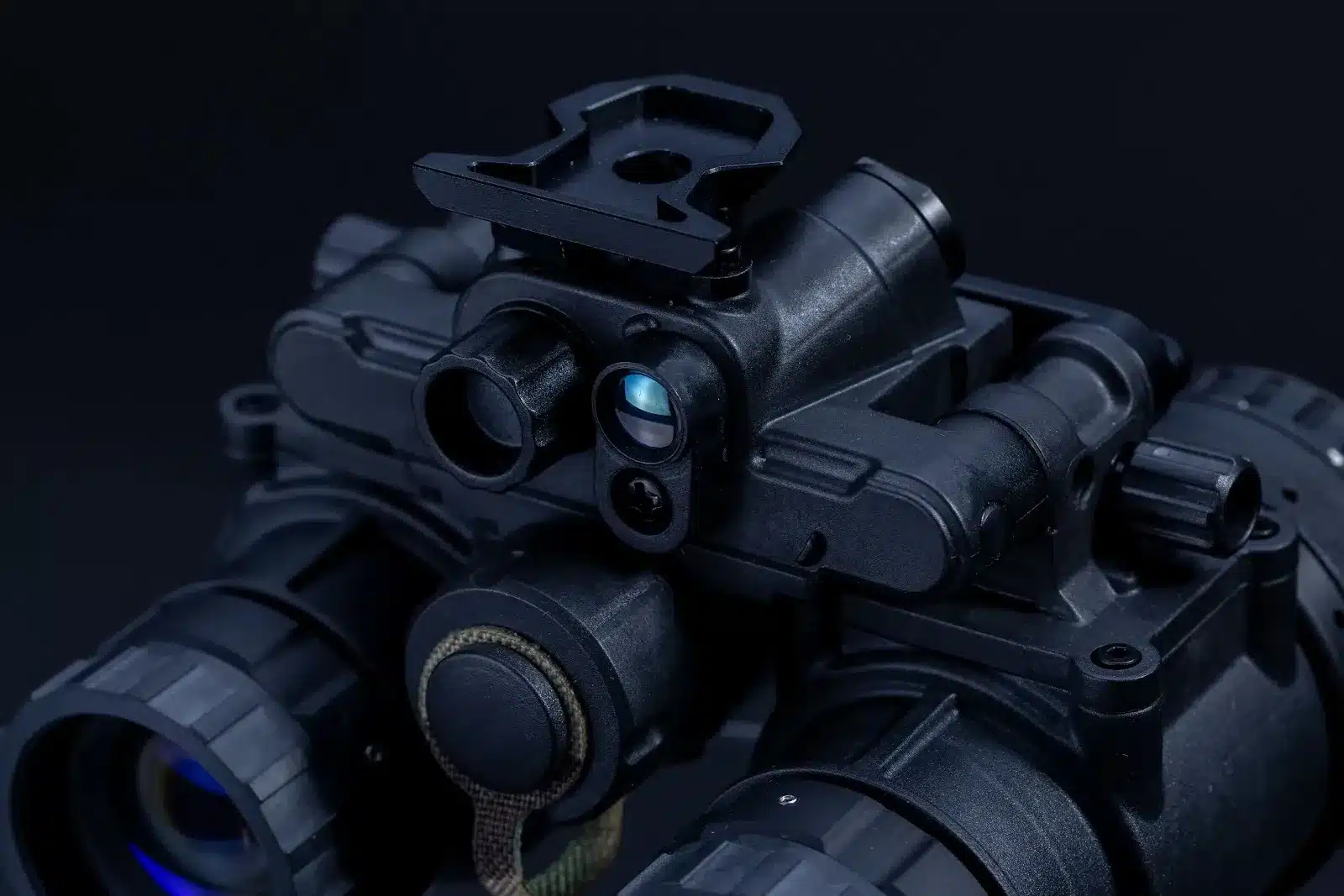
Chasing the highest FOM number is one of the most common buying mistakes out there. FOM tells you about resolution and signal-to-noise ratio ONLY. This has very little bearing on how well suited a complete system is to your needs, or whether the Pros and Cons of a system are weighted in your favor. For example, good lenses can have a bigger effect on image clarity than GAIN and RES combined, and features like onboard IR illumination can dramatically affect your actual experience in the real world. Dealers charge premiums for tubes with higher than average FOM ratings, even when those extra points come from a higher RES rating than your eye can see.
While the difference between 1800 FOM and 2376 FOM may be immediately and obviously noticeable in scenarios where there is virtually zero visible ambient light, during normal mixed use across the most common scenarios, the difference may be virtually unnoticeable, and probably not worth the thousands of dollars in extra expense.
A quality housing stacked with useful features, quality lenses, and expert assembly & collimation should all be equally important in your buying decision. And don’t forget a REAL WARRANTY backed by trained technicians and a deep reserve of replacement parts without long turnaround times.
Here’s your checklist:
-
Tube GEN
-
Tube TYPE: 11769 for Manual Gain-enabled devices, 10160 for auto-gain
-
Measured tube data: FOM, SNR, EBI, halo, and gain
-
Housing standard: appropriate to your use case, with features that will improve your experience
-
Quality Lenses: Mil-STD from Noctis, low-cost / high-performance from BrightPath, or ULTIMATE clarity and field of view from RPO.
-
Verified collimation on binocular systems using HOFFMAN systems.
-
Warranty terms that provide for qualified repair from trained technicians and immediate replacement of parts from stock on hand. Check if the warranty covers Accidental Damage.
FAQs: Night Vision Binoculars
Are dual-tube night vision binoculars always better than a PVS-14?
No. Dual-tube systems usually offer better depth perception and field of view, but a PVS-14 can be lighter, more cost-effective, and a sound choice for highly mixed environments.
Is Gen3 always better than Gen2+?
Gen3 often offers stronger low-light potential, especially with premium, hi-spec tubes from manufacturers like L3Harris or Elbit Systems. Gen2+ options, including NNVT-based builds, can provide nearly identical performance across many common scenarios, and as much as 90% of the performance of similarly spec’d GEN3 tubes even in the most challenging low-light scenarios, for half the cost or less.
Should I buy the highest FOM tube I can afford?
Not alone. Quality lenses and a rugged housing with great features should all be balanced together when considering how to spend your budget.
Why does collimation matter on binocular NVGs?
Collimation aligns the two optical channels so your eyes can fuse the images comfortably. Poor collimation can cause eye strain, headaches, and reduced confidence during movement — which is why Aeon Tac verifies collimation on every binocular build before it ships.
