


The U.S. Department of Defense (Dept. of Defense, now colloquially called the ‘Dept. of War” under Trump) just set the most important milestone in military technology in nearly 25 years, the DOD BiNOD Technology Playbook with its new BiNOD Program for the U.S. Army.
The historic twist? For the first time in federal procurement history, an active U.S. military requisition program includes Gen2+ image intensifier tube technology—breaking a decades-long, dogmatic lock held exclusively by U.S.-only “Gen3” tube technology.
The reason is straightforward: Gen2+ night vision is taking over because modern Gen2+ tubes match similarly spec’d Gen3 tubes in most real-world lighting, at a fraction of the cost. BiNOD makes it official, with up to $352.6M going to Photonis Defense for 1800+ FOM white phosphor Gen2+ tubes.
What Is the BiNOD Program?
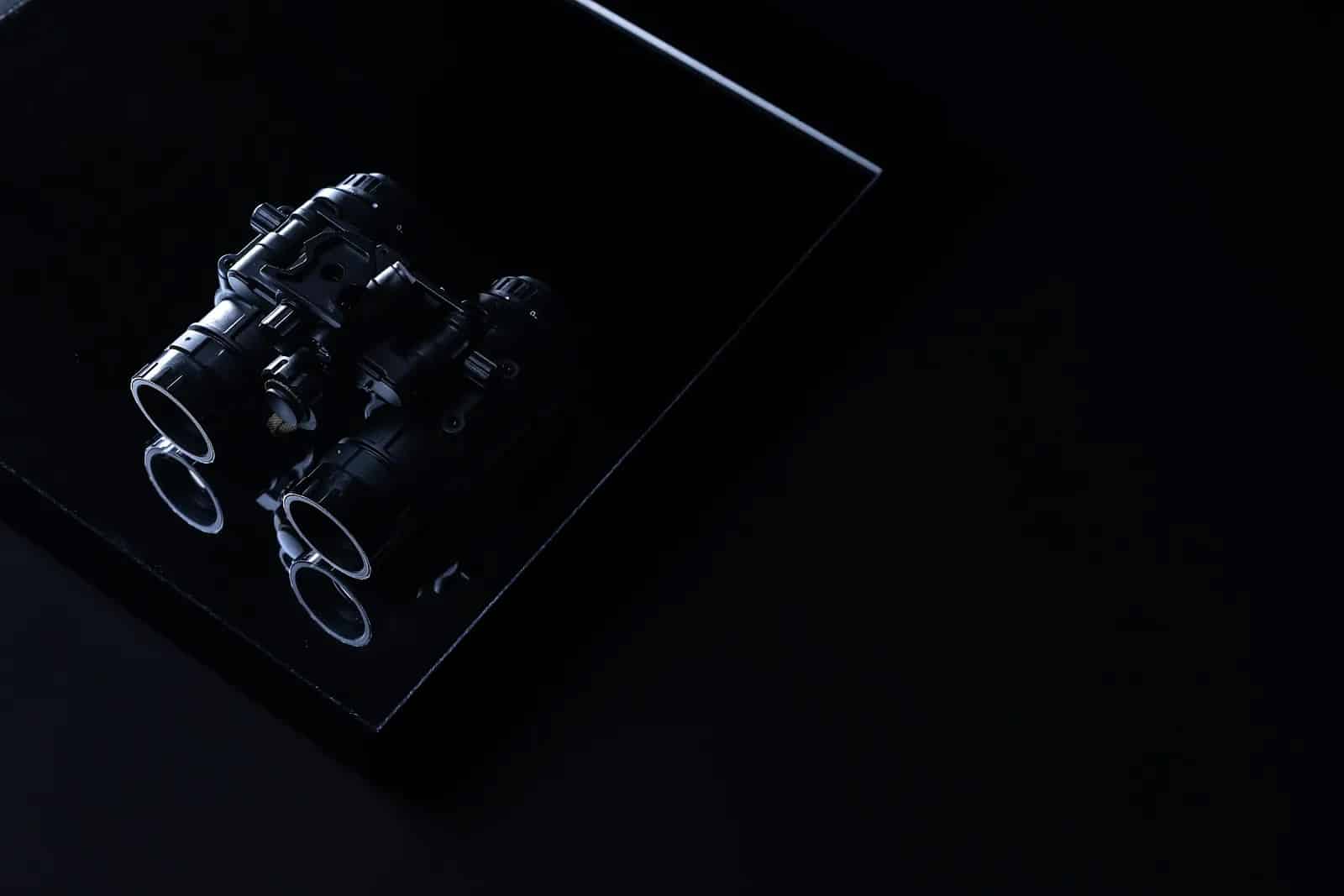
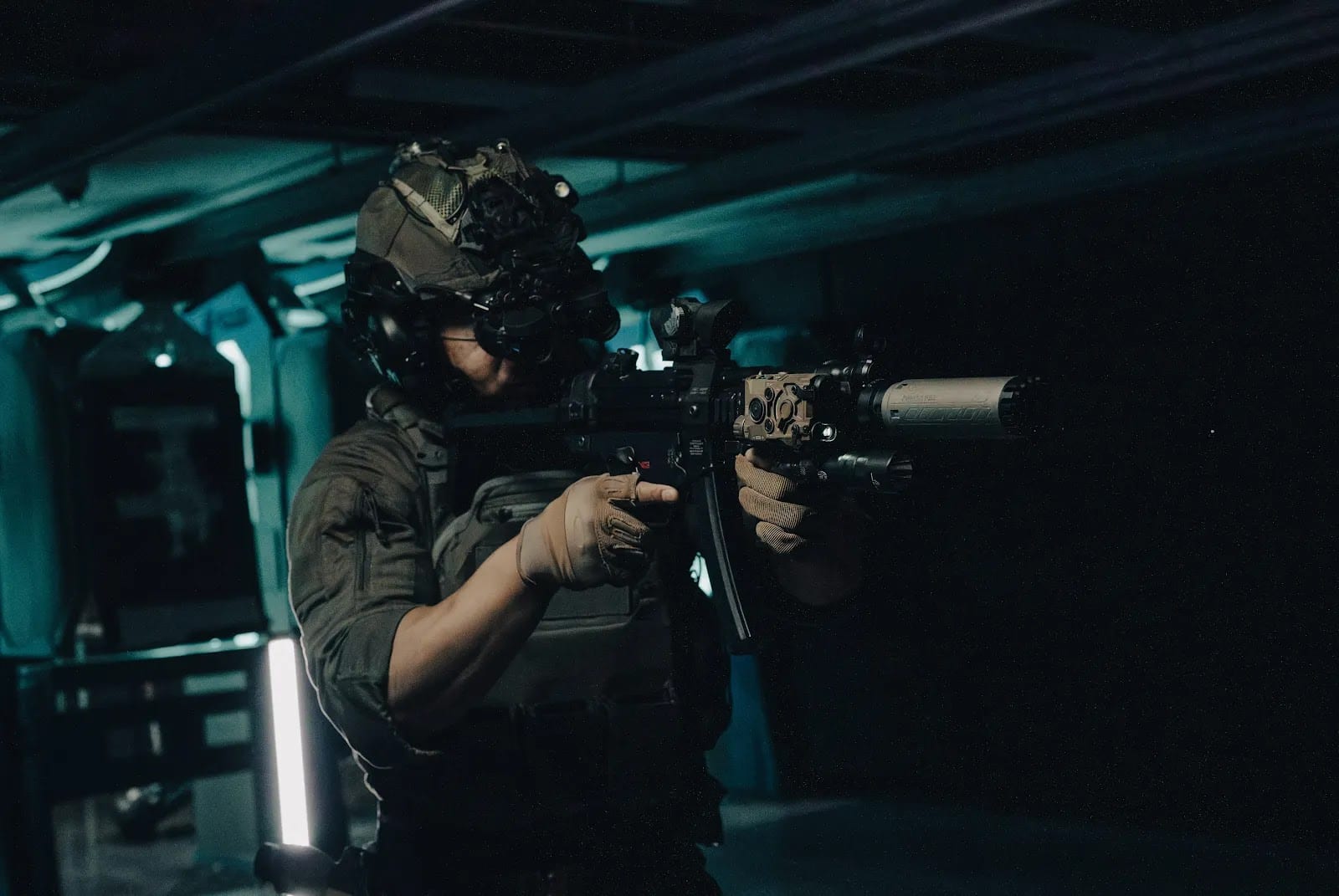
The BiNOD initiative equips US Army general ground forces with modern, depth-perceptive Binocular Night Vision devices to replace aging legacy systems like the single-tube PVS-14 monocular.
The DoD issues these programs when battlefield requirements shift, technology benchmarks improve dramatically, and equipment capabilities mature. Previous programs focused on high-end specialized units, including:
- ENVG-B (Enhanced Night Vision Goggle – Binocular): A high-cost thermal-fusion system fielded to close-combat formations (L3Harris).
- SBNVG (Squad Binocular Night Vision Goggle / AN/PVS-31D): A binocular system contract designed primarily for the U.S. Marine Corps.
- AN/PVS-31A: Dedicated, extremely high-performance dual-tube Gen3 binocular systems fielded to SOCOM elements, and to this day considered the pinnacle of binocular.
BiNOD represents an open, performance-driven procurement designed to field hundreds of thousands of standard dual-tube goggles without the prohibitive cost of fusion or boutique Gen3 manufacturing.
Dollars, Dates, and Companies Involved
- RFP Solicitation: Launched under solicitation W91CRB-25-R-0007.
- Award Ceiling & Timeline: Multi-vendor Indefinite-Delivery/Indefinite-Quantity (IDIQ) contracts running through February 27, 2033, with ceilings exceeding $1.2 billion combined across prime awardees.
- Selected Vendors: Here is where history is being made. Alongside Gen3 tube manufacturers like Elbit and L3Harris, traditionally the only two major awardees for any type of night vision requisition, including complete devices and/or intensifier tubes, nearly a third of the total award ($352.6M ceiling) went to Photonis Defense, to supply 1800+ FOM Gen2+ white phosphor tubes.
While Photonis Inc. is supplying the Gen2+ tubes that broke this historic U.S. federal barrier, this contract signals a massive endorsement for the modern, high-performance, high-FOM multi-alkali architecture tubes perfected globally by manufacturers like NNVT.
The Evolution: Gen3 vs. Modern Gen2+
For decades, analog night vision placed Gen3 on a pedestal. Built with Gallium Arsenide (GaAs) photocathodes by manufacturers like L3Harris and Elbit, Gen3 delivered unbeatable light amplification in very low ambient light conditions.
Early Gen2+ tubes from NNVT & Photonis were viewed as the “redheaded stepchild” of night vision—dimmer, noisier, and technologically inferior.
Over the last several years, modern Gen2+ engineering completely flipped the script:
- Photocathode Refinement: Advanced multi-alkali photocathodes—exemplified by mass-scale manufacturers like NNVT—pushed resolution and signal-to-noise ratios (SNR) to levels that directly challenge standard-spec Gen3 specs.
- Halo and Light Management: In dynamic environments (urban centers, vehicle headlights, muzzle flash), NNVT Gen2+ tubes suffer virtually no blooming or tube flare, featuring tighter halo sizes and faster autogating recovery than unfilmed or thin-filmed Gen3.
- Wider Spectral Bandwidth: Multi-alkali tubes can collect and process a wider light spectrum, picking up out-of-band lasers and illuminators that standard Gen3 tubes struggle to resolve.
| Feature | Legacy Gen3 (Elbit / L3Harris) | Modern Gen2+ (NNVT / Photonis) |
| Photocathode | Gallium Arsenide (GaAs) | Advanced Multi-Alkali |
| Urban Light Handling | Prone to halo blooming & washout | Superior highlight suppression & tight halo |
| Spectral Sensitivity | Narrow Near-Infrared (NIR) | Broad spectrum (near-UV through NIR) |
| Extreme Starlight Performance | Marginal edge in pitch-black conditions | High clarity across 95% of real-world environments |
| Cost & Scalability | High manufacturing cost, constrained supply | Highly cost-effective, scalable production |
The Real-World Verdict: Value Meets Performance
When comparing tubes of roughly equal specifications (e.g., matching FOM and SNR), Gen3 still outperforms Gen2+ in pitch-black, totally overcast conditions and deep inside heavy tree canopies—scenarios not often encountered on modern operations. In typical ambient light conditions (starlight, moonlight, suburban or urban operations), the human eye cannot easily spot the difference between an NNVT Gen2+ tube and a mid-tier or similarly spec’d Gen3 unit. Retailers and independent testers have discovered this in their own testing for years, and we here at Aeontac have built our brand around bringing high-performance technology to our customers for affordable prices, and Gen2+ technology has been at the forefront of that push.
This performance parity at a fraction of the cost drove the civilian market first, followed rapidly by state and local law enforcement agencies. With the BiNOD Program, the U.S. Federal Government has finally acknowledged what our customers and many thousands of end-users already knew: modern Gen2+ provides top-tier tactical capability without the astronomical price tag.
Build Your System at Aeontac Night Vision
The government just validated what we have built our business on for years.
Aeontac Night Vision is the largest importer, distributor, and retailer of Gen2+ intensifier tubes in America. By sourcing directly from market-leading manufacturers like NNVT, Aeontac sits at the nexus of maximum optical performance and unmatched value.
Whether you are configuring a custom dual-tube night vision binocular, upgrading law enforcement gear, or buying your first dedicated analog setup, Aeontac pairs hand-matched NNVT tubes with premium optical housings to deliver true mil-spec performance within your budget.
Explore our full inventory of NNVT Gen2+ systems and high-performance night vision optics today.
FAQ: Gen2+ Night Vision and the BiNOD Program
Is Gen2+ as good as Gen3?
In most real-world conditions, yes. When tubes have roughly equal specs (matching FOM and SNR), the difference is hard to see under starlight, moonlight, or in suburban and urban settings. Gen3 still has an edge in pitch-black, overcast conditions and under heavy tree canopy.
Why did the U.S. Army choose Gen2+ tubes for BiNOD?
BiNOD is designed to field hundreds of thousands of standard dual-tube goggles without the prohibitive cost of fusion systems or boutique Gen3 manufacturing. Modern Gen2+ tubes deliver top-tier tactical capability at a fraction of the cost.
Who is supplying the Gen2+ tubes for BiNOD?
Photonis Defense, under an award with a ceiling of $352.6M, to supply 1800+ FOM white phosphor Gen2+ tubes. Gen3 manufacturers Elbit and L3Harris are also among the awardees.
Where does Gen2+ perform better than Gen3?
In bright, changing light such as urban centers, vehicle headlights, and muzzle flash. Modern Gen2+ tubes show tighter halos and less blooming than unfilmed or thin-filmed Gen3. They also pick up a wider light spectrum, including out-of-band lasers and illuminators.
